From upload to action
Upload the set. Review the disciplines. Turn findings into action.
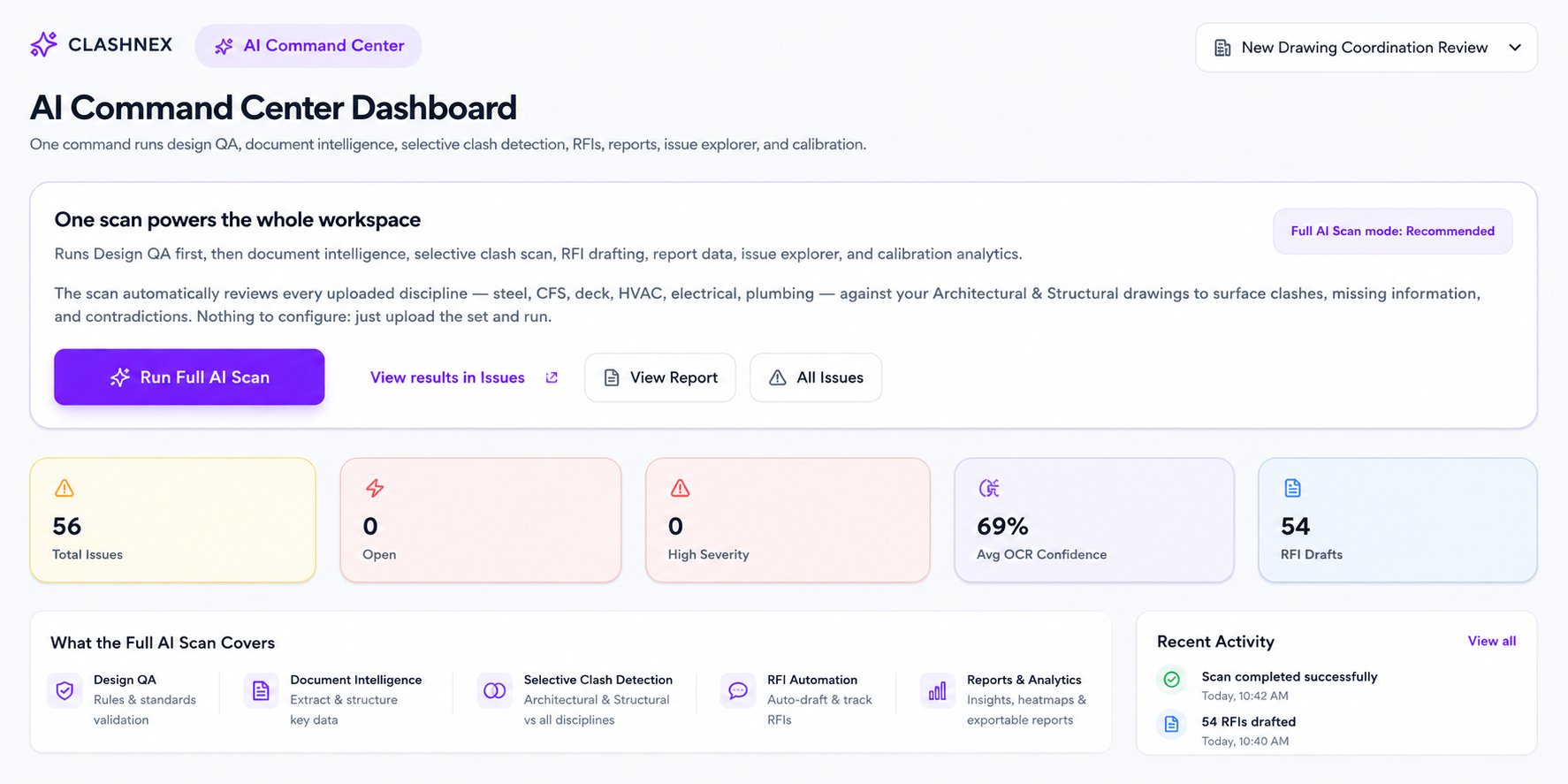
Clash Nexus AI starts with architectural and structural drawings as the base set, checks every uploaded trade package against that base and against each other, compares revisions, and turns evidence-backed findings into reports, RFIs, and issue workflows.
Upload the full drawing set
Upload architectural, structural, civil, MEP, fire, low-voltage, elevator, landscape, and acoustic drawings as one coordinated review package.
Build an evidence-first drawing graph
Sheets, references, schedules, notes, details, revisions, and visual evidence are organized into a structured review layer.
Read trades against the base set
Architectural and structural drawings anchor the review. Uploaded trades are checked against the base and against each other.
Compare revisions and risk
NexCompare identifies what changed between versions, where it changed, and whether it creates new coordination risk.
Turn findings into action
NexAction packages evidence-backed findings into review-ready issues, team workflows, and RFI-ready output.
Discipline coverage
Built for 13 construction disciplines
Clash Nexus AI reviews full drawing sets across design and trade scopes. Architectural and structural drawings form the base set, while every uploaded discipline is checked for missing information, coordination risk, revision impact, and cross-trade conflicts.
The workflow is staged around the way coordination teams review drawings.
The platform reads the full package first, structures the evidence, checks discipline relationships, compares revisions, and keeps weak signals in review instead of flooding the report.
Architectural and structural drawings anchor the coordination review so every uploaded trade can be checked against the core building intent.
NexScan reads architectural, structural, civil, mechanical/HVAC, plumbing, electrical, fire, low-voltage, landscape, elevator, and acoustic scopes as one set.
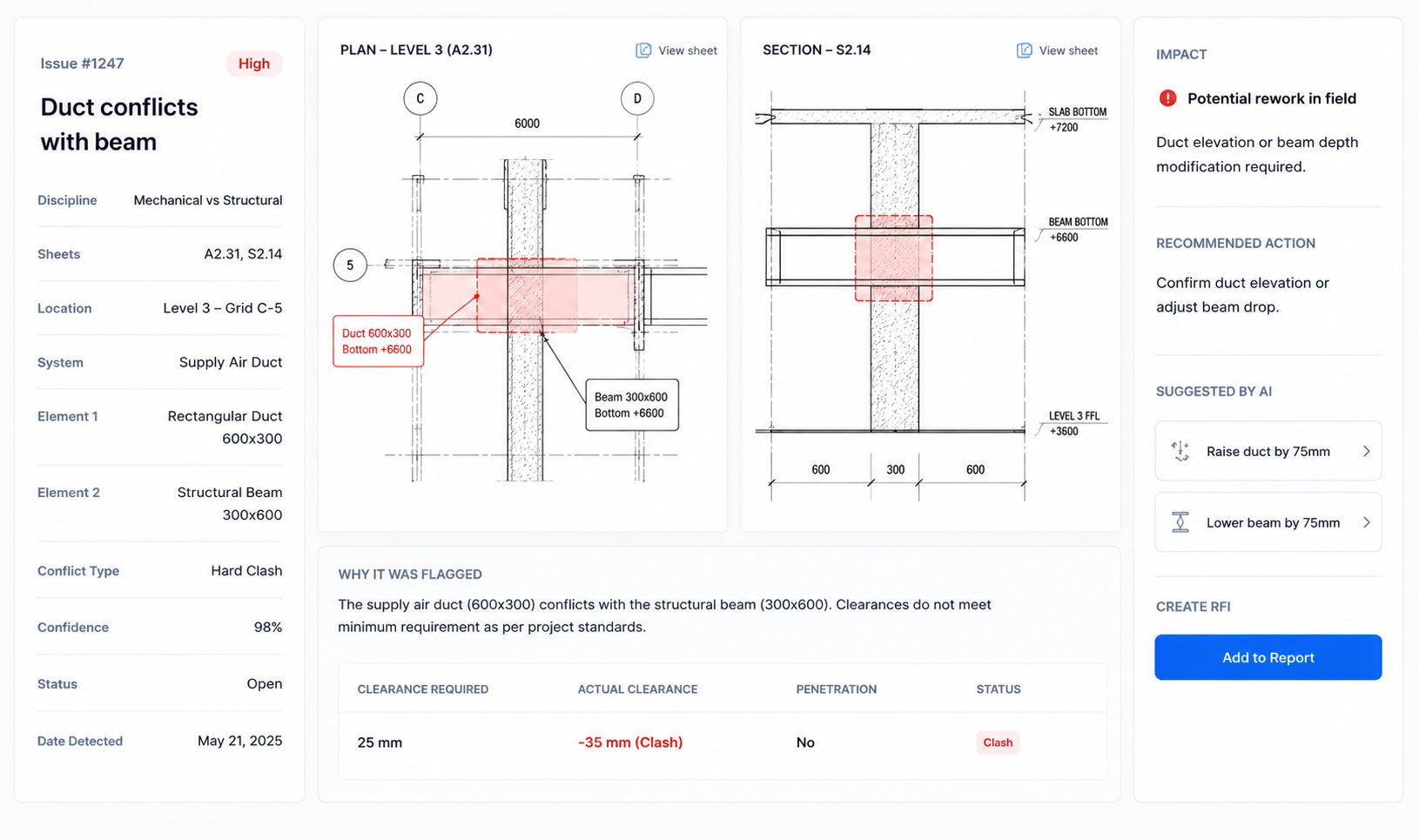
Uploaded trades are checked against the base set and against each other for clashes, missing information, contradictions, support conditions, and pathway conflicts.
NexCompare matches sheets across drawing versions and highlights what changed, where it changed, and whether it creates new coordination risk.
NexAction packages findings into review-ready issues, RFI-ready output, reports, and provider-ready handoffs with sheet references and visual proof.
See how evidence-backed review works
Start with a sample report, then upload your own package when ready.